
Production is not just buying and selling
Inventory software usually assumes stock arrives from a supplier and leaves through a customer. The moment you make something yourself, that model stops describing your business.
You make components you never buy. You hold batches for weeks before they can be sold. Your yield is never exactly what the recipe predicted. And your true cost per unit is buried in a spreadsheet that nobody has updated since the last price rise.
Stockria handles production as its own thing, without a separate manufacturing plan or an ERP rollout.
How manufacturing works in Stockria
Recipes that contain other recipes
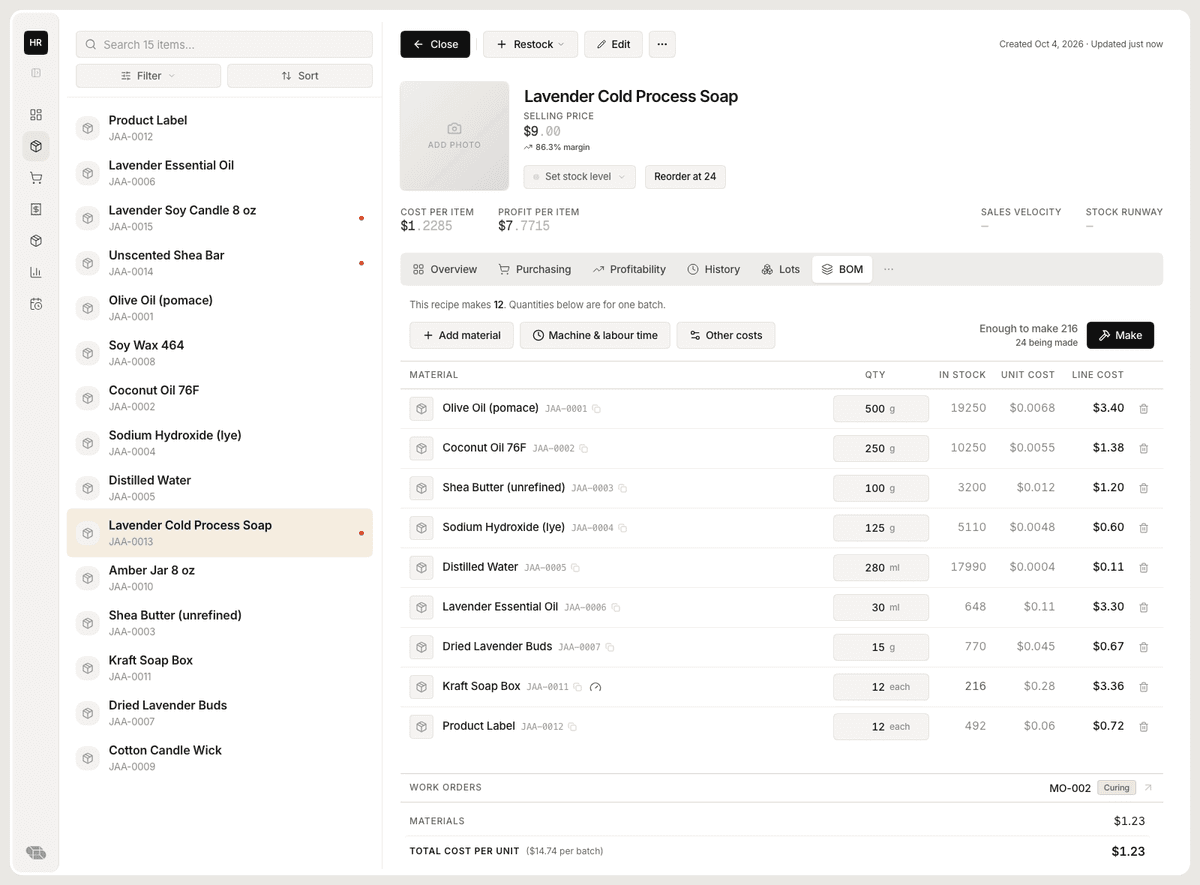
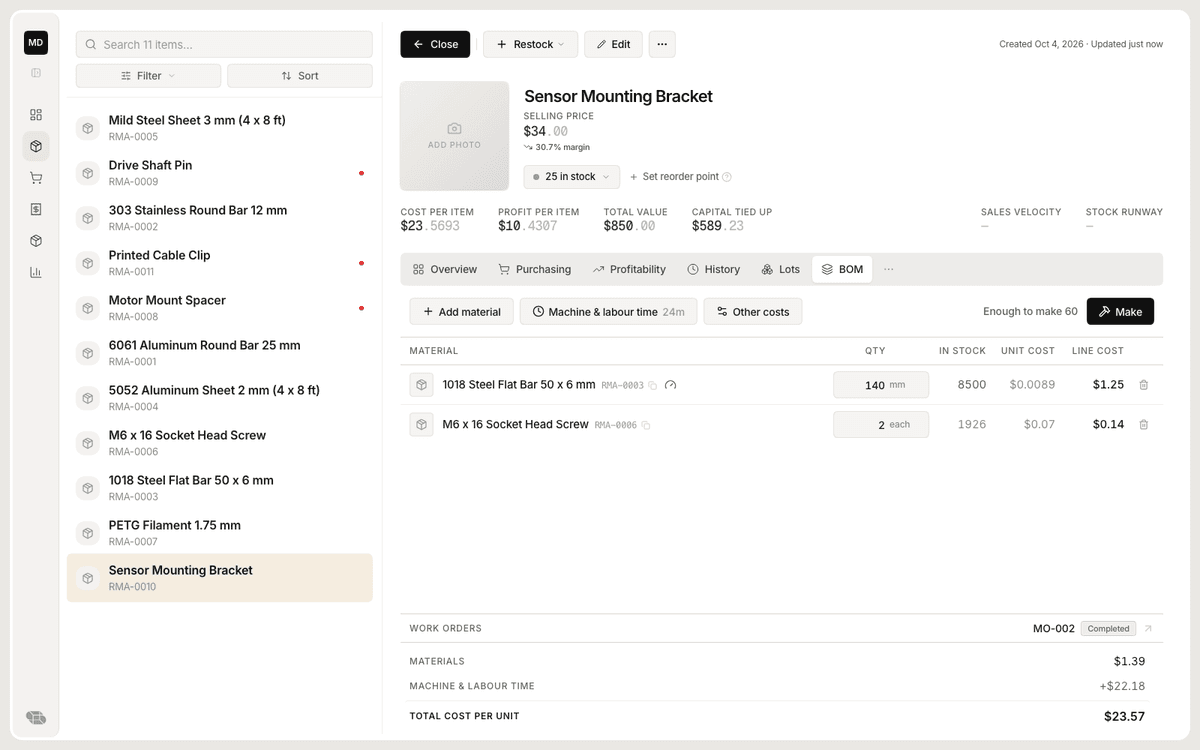
Give any product a bill of materials listing what goes into it. The important part is that a component can be something you make. An infused oil, a syrup, a dough, a scented blend: each becomes its own stocked item with its own quantity and its own cost, and then appears as a single line inside every product that uses it.
Nest them as deep as your process needs. Costs roll up automatically, so when a raw material price changes, every intermediate and every finished product above it updates. Each item also shows where else it is used, so you can see the effect of a change before you commit to it.
Recipes that make a batch, not a unit
Most production happens in batches. A recipe can state what one batch makes, so you write 1,000 mL of oil from 100 g of flowers rather than pretending to make a millilitre at a time. Component quantities are per batch, and Stockria scales them to whatever you decide to build.
Work in progress for anything that takes time
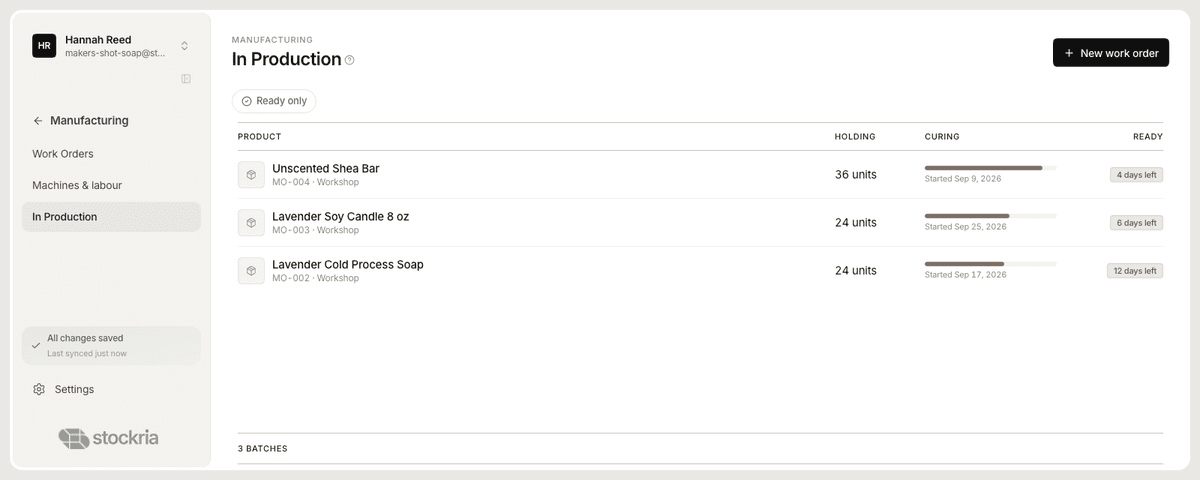
Curing, steeping, fermenting, infusing, aging, drying. Give a product a process and a duration, and starting a batch consumes the materials straight away while holding the output aside.
The In Production board groups every open batch by process and counts down to its ready date. Nothing is sellable until you release it, so your available stock never promises something that is still on a curing rack, and your materials are not double counted while the batch runs.
Costs from what you actually made
When you release a batch you enter what you got. Anything lost, whether pressed-out herb, trimmed edges, or bars that did not come out right, goes in its own box.
Stockria takes the real materials cost, adds labour, waste and overhead if you use them, and divides by the good units rather than the planned ones. That number is written to the product cost and to its cost history, so your margins reflect the batch you actually made.
Batch numbers and expiry, created for you
Released batches get a lot number and, if the product has a shelf life, an expiry date. Stock is traceable back to the batch that produced it, which matters for anything ingestible, applied to skin, or subject to a recall.
Buy in one unit, build in another
Purchase a 25 kg sack, count in grams, and write recipes in grams. Purchase orders read in the unit you order, stock is held in the smallest unit you work in, and product lists display whichever is easiest to read. No manual conversion and no awkward fractions.
Made in a real place
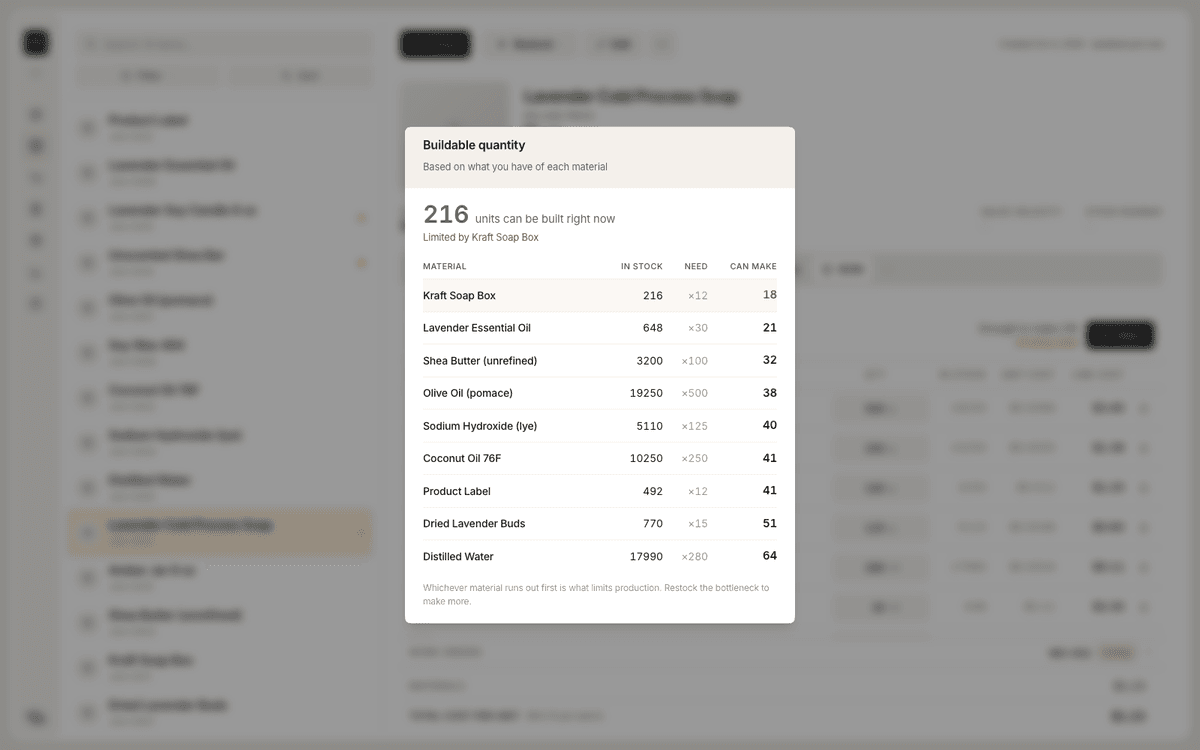
Every batch records where it was made. If you try to build somewhere without the materials on hand, Stockria stops you and names the location and the shortage instead of letting stock go negative.
Build when the order arrives
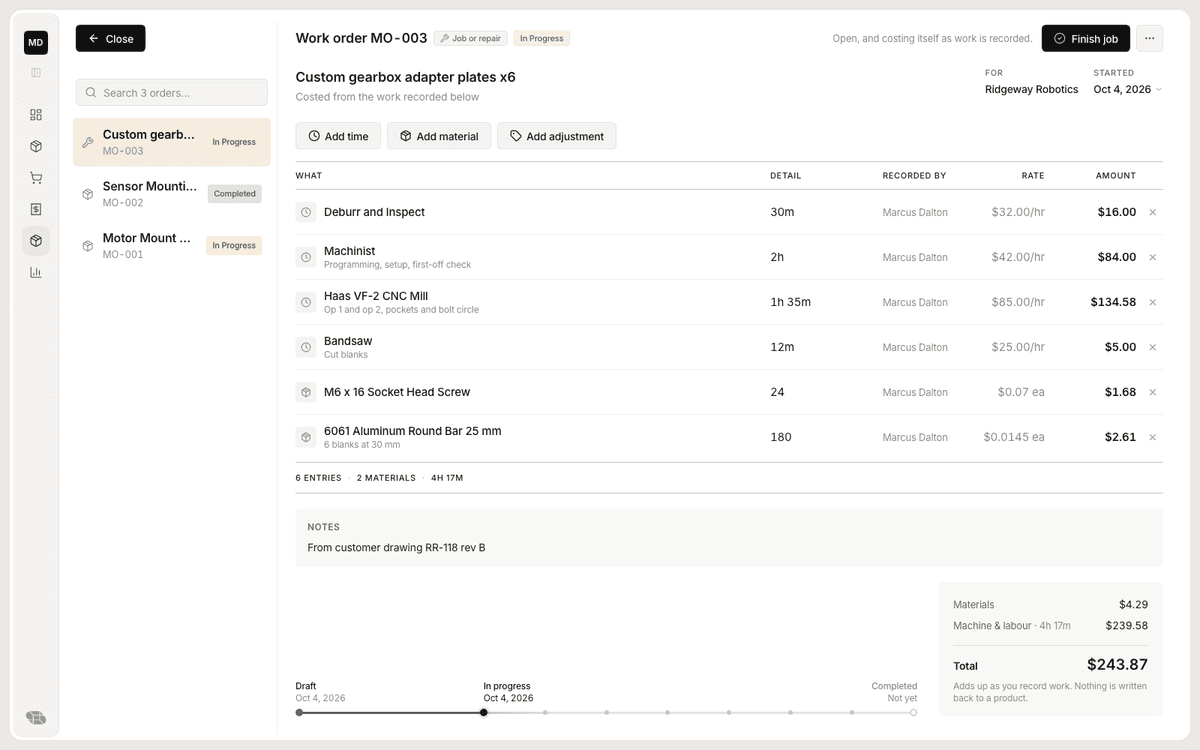
For products you assemble to order rather than stock, Stockria can create and complete the work order automatically when a sale comes in, drawing down the components and, if needed, building the sub-assembly first. If materials are short, the order is flagged with exactly what is missing rather than failing silently.
Who this is for
Makers who produce their own components: soap, cosmetics, herbal products, candles, sauces, syrups, coffee, chocolate, and anything that spends time curing or fermenting before it can be sold. Assemblers who build kits and bundles from parts. Any small manufacturer who has outgrown a recipe spreadsheet but has no interest in an ERP implementation.
Manufacturing is included on every Stockria plan. The paid plans raise limits on items, users and locations. They do not unlock features.