

What is cycle counting?
Cycle counting is a method of auditing inventory by counting a small portion of your stock on a regular schedule instead of counting everything at once. Rather than shutting down operations for a full physical count once or twice a year, you count a subset of items each day, week, or month.
The goal is simple: keep your inventory records accurate without disrupting daily operations. Over time, every item in your inventory gets counted, discrepancies get corrected, and your data stays reliable.
Why full physical counts fall short

A full physical count means counting every item in your warehouse or store. For a business with 500 items, this takes a full day. For 5,000 items, it can take a weekend. During that time, you cannot receive shipments, fill orders, or move stock.
The bigger problem is what happens between counts. If you count everything in January and again in July, you have six months of unchecked data. Errors accumulate. A miscount in February compounds into a purchasing mistake in April.
How to set up a cycle counting schedule
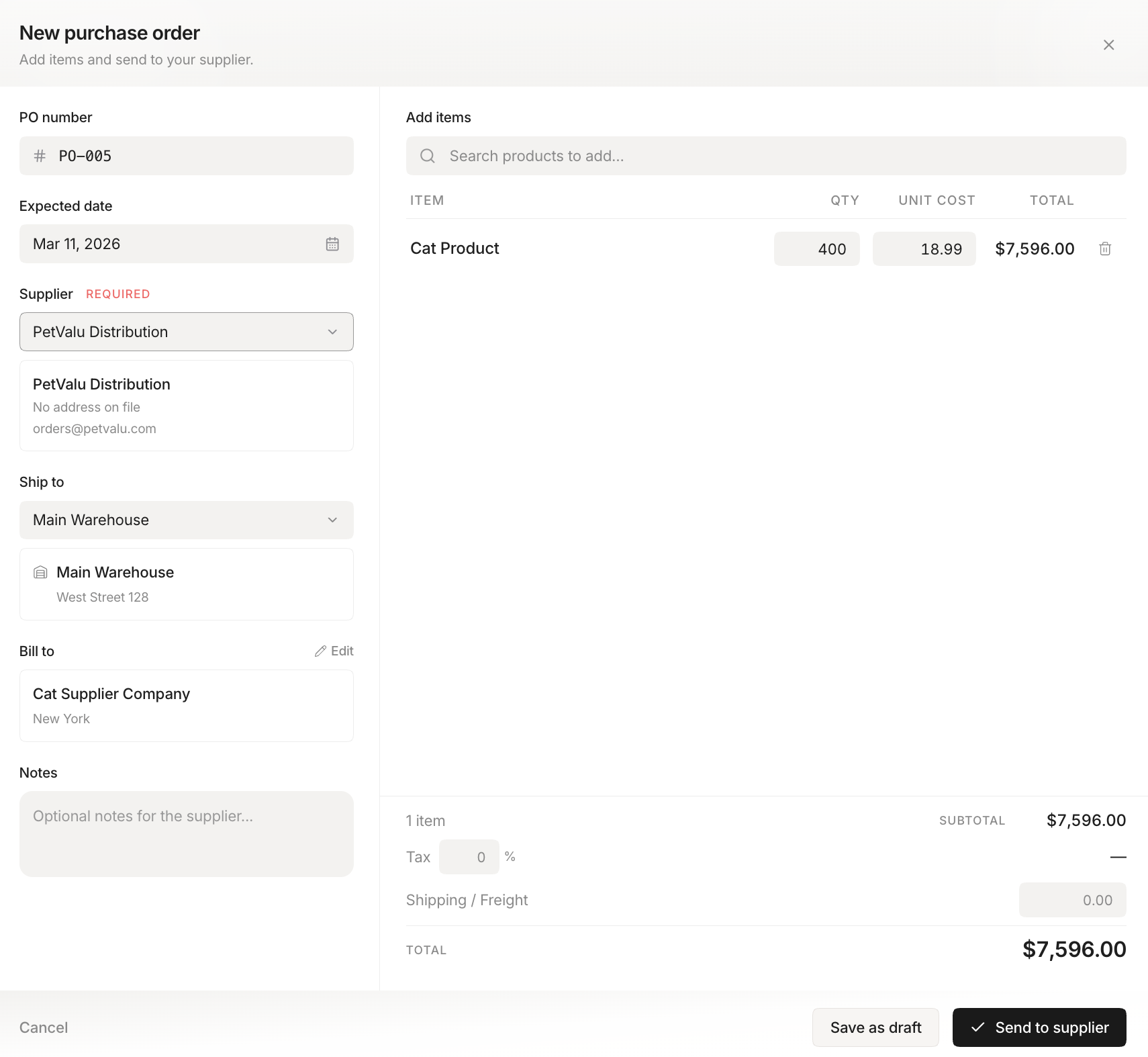 Stockria in action - Generate purchase orders from your low-stock list.
ABC analysis. Categorize your items by value or movement frequency. A-items (top 20% by revenue) get counted monthly. B-items get counted quarterly. C-items get counted twice a year. This focuses your effort where errors cost the most.
Daily counts. Pick 10-20 items each day. Assign a team member to count those items at the start or end of their shift. In Stockria, you can create a count session, assign items, and track variances automatically.
Trigger-based counts. Count an item whenever something looks wrong: a negative quantity, a customer complaint about availability, or a reorder alert that fires too early. These reactive counts catch problems before they cascade.
Running a count in practice
- Select items for today's count
- Print or load the count sheet on your phone
- Go to the location and count physical units on the shelf
- Enter the counted quantity into Stockria
- Review any variances (difference between expected and actual)
- Investigate discrepancies and apply adjustments with a reason code
The investigation step matters most. A variance is a symptom. The cause might be theft, receiving errors, damaged goods not recorded, or a data entry mistake. Fix the cause, not just the number.
Common mistakes to avoid
Counting during peak hours. Items move while you count them. Count before the store opens or after the rush.
Skipping the investigation. Adjusting the number without understanding why it was wrong means the same error will happen again.
Not tracking accuracy over time. Measure your inventory accuracy rate monthly. If you are at 85%, the goal is 95%+. Cycle counting should show steady improvement.
Cycle counting is not exciting work. But businesses that do it consistently spend less on emergency orders, lose fewer sales to stockouts, and make better purchasing decisions. The data compounds.