

What vendor managed inventory means
In a vendor managed inventory (VMI) arrangement, your supplier monitors your stock levels and decides when and how much to replenish. Instead of you placing purchase orders, the supplier takes responsibility for keeping your shelves stocked.
Think of the soda cooler at a convenience store. The Coca-Cola rep visits weekly, checks what has sold, and restocks accordingly. The store owner does not place orders for Coke - the vendor handles it.
How VMI works in practice

The process follows a simple loop. You share your sales data and current stock levels with the supplier, either manually or through a connected system. The supplier analyzes the data and determines what needs restocking. They ship the replenishment order. You receive the goods and the cycle repeats.
The key difference from traditional ordering is who makes the decision. In traditional ordering, you decide what and when to buy. In VMI, the supplier decides based on data you share.
Benefits for small retailers
Less time on purchasing. Instead of reviewing stock levels, calculating quantities, and placing orders with multiple suppliers, the work shifts to them. For a small retailer spending hours each week on purchasing, this time savings is significant.
Fewer stockouts. Suppliers are motivated to keep you stocked because they want to sell. Their forecasting often improves over time as they learn your sales patterns. And since restocking is their job, they prioritize it.
Lower inventory levels. VMI suppliers typically replenish more frequently in smaller quantities. This keeps less cash tied up in inventory on your shelves while maintaining availability.
Supplier expertise. Your supplier knows their products better than you do. They know which sizes sell fastest, which flavors trend seasonally, and when new items should be introduced. VMI lets you leverage that knowledge.
Risks and downsides
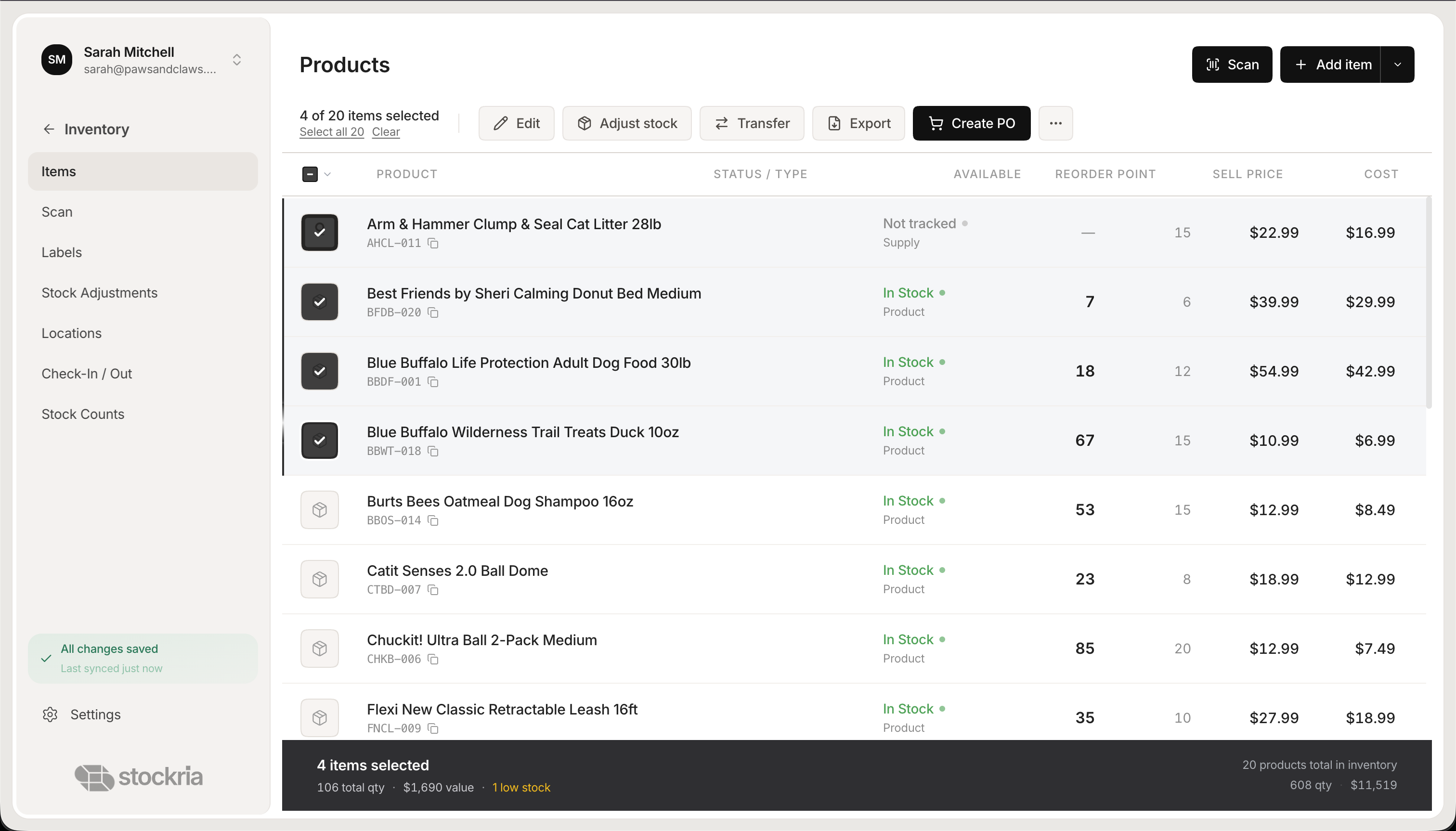 Stockria in action - Manage your entire product catalog with stock levels, pricing, and reorder points.
Loss of control. You are trusting the supplier to make good decisions about your shelf space and stock levels. A supplier who overstocks to boost their numbers costs you space and cash.
Data sharing requirements. VMI only works if you share sales data openly with suppliers. Some businesses are uncomfortable with that level of transparency.
Dependency on one supplier. If the supplier has problems - a factory shutdown, a shipping delay, a bankruptcy - you have less flexibility because you have not been managing that category of inventory yourself.
Not all suppliers offer it. VMI requires effort from the supplier side. Smaller suppliers may not have the resources or interest in managing your inventory.
When VMI makes sense
VMI works best for commodity or staple products that sell predictably, product categories where the supplier has more expertise than you, high-volume items where restocking decisions are frequent, and relationships with large or established suppliers who have VMI capabilities.
VMI is harder to make work for seasonal or trendy products with unpredictable demand, custom or niche items with small suppliers, and businesses that need tight control over every purchasing decision.
Getting started with VMI
Start with one supplier and one product category. Choose a supplier you already have a strong relationship with and products with stable, predictable sales. Set clear expectations about inventory levels, visit frequency, and what happens if something goes wrong.
Keep oversight even with VMI
VMI does not mean you stop paying attention. Review supplier-managed inventory levels monthly. Compare stockout rates before and after VMI. Make sure the arrangement is actually saving you time and money, not just shifting problems around.