

What just-in-time inventory actually means
Just-in-time means ordering inventory to arrive right when you need it, not weeks or months before. Instead of filling a warehouse with safety stock, you keep minimal inventory on hand and rely on fast, reliable deliveries from suppliers.
Toyota popularized JIT in the 1970s. The idea is simple: inventory sitting on shelves is money doing nothing. The less you hold, the more cash you free up for other parts of the business.
The real benefits for small businesses

Lower carrying costs. Storage space costs money. Insurance on inventory costs money. The risk of items going obsolete or expiring costs money. JIT reduces all of these.
Better cash flow. If you buy $20,000 of inventory every quarter, switching to monthly orders of $6,500 keeps $13,500 in your bank account. For a small business, that kind of cash flow improvement changes what is possible.
Less waste. Perishable goods spoil. Trends change. Technology evolves. The less inventory you hold, the less you risk writing off.
Forced discipline. JIT requires accurate demand forecasting and strong supplier relationships. Building those capabilities makes your entire operation better.
The risks you need to understand
Stockouts. If a supplier is late or a shipment is damaged, you have no buffer. A single disruption can mean empty shelves and lost sales.
Supplier dependency. Your business becomes heavily dependent on your suppliers' reliability. If your main supplier has problems, you have problems.
Higher per-unit shipping costs. Frequent small orders often cost more to ship than occasional large ones. You might save on storage but spend more on freight.
Demand spikes. An unexpected surge in demand can leave you scrambling. JIT works best when demand is predictable.
When JIT makes sense for small businesses
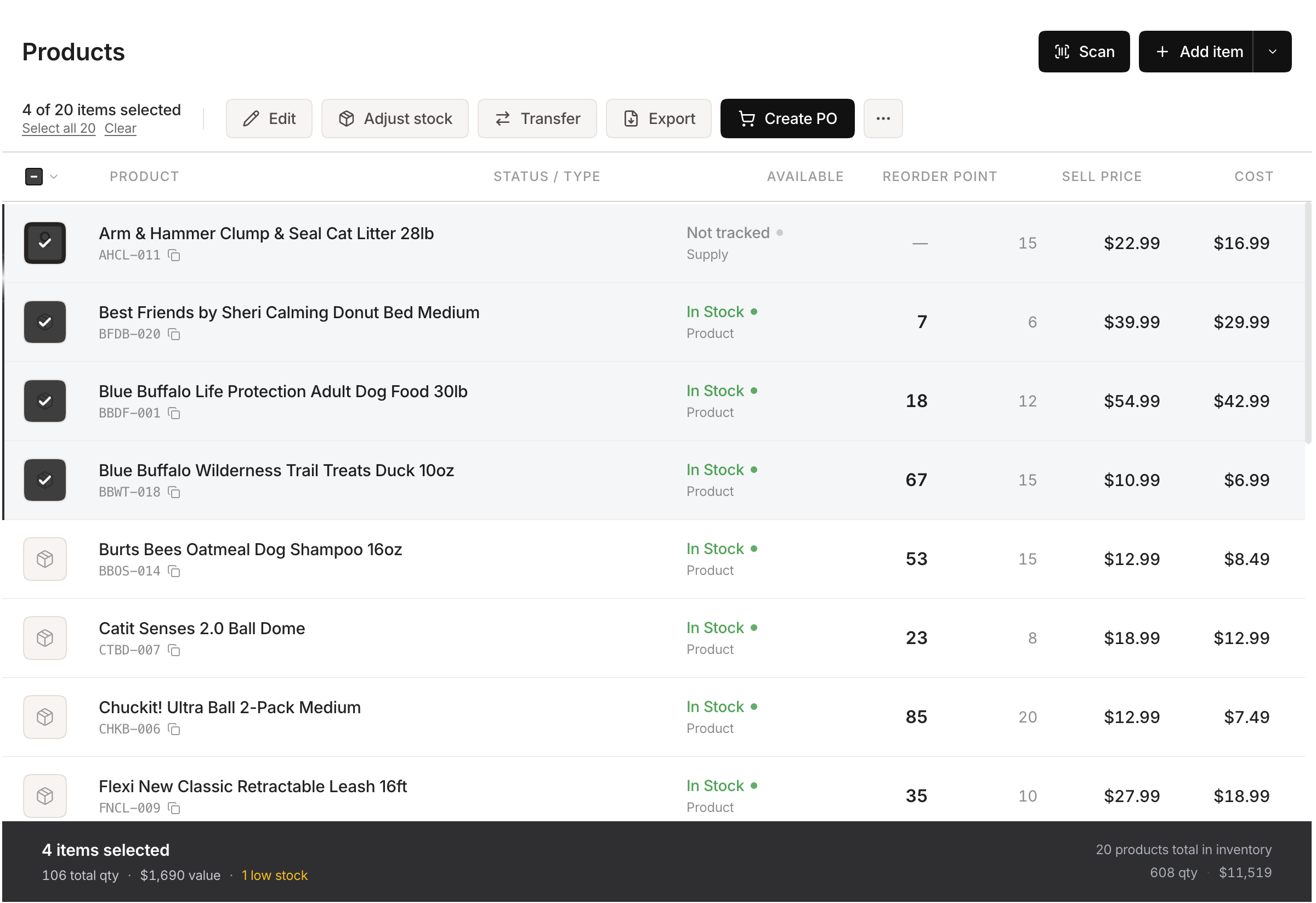 Stockria in action - Edit product details, adjust stock, and track cost from one screen.
JIT works well when you have reliable local suppliers with short lead times, predictable demand patterns, expensive or bulky inventory that is costly to store, and products that lose value quickly.
JIT works poorly when your suppliers are overseas with long lead times, demand is highly seasonal or unpredictable, your products are small and cheap to store, or you are in a market where stockouts mean losing customers permanently.
A practical middle ground
Most small businesses should not go full JIT. Instead, consider a hybrid approach.
Apply JIT principles to your most expensive or bulky items. These benefit most from reduced carrying costs. Keep traditional safety stock for cheap, small items that are critical to your operation. Running out of a $2 component that stops a $200 product from shipping makes no sense.
Start by identifying your top 10 items by carrying cost. Calculate how much you spend storing them each month. Then talk to your suppliers about shorter lead times or more frequent deliveries on those specific items.
Getting started
Track your current inventory turns. If items sit on shelves for months before selling, that is where JIT thinking can help. You do not need to transform your entire supply chain overnight. Reduce stock on a few high-cost items, measure the results, and expand from there.