

What order management software does
Order management software (OMS) handles the lifecycle of a customer order from the moment it is placed to the moment it is delivered. It tracks orders, manages fulfillment, handles returns, and keeps customers informed about their order status.
At its simplest, an OMS is a centralized place to see all your orders, regardless of where they came from - your website, a marketplace, a phone call, or a walk-in customer.
Why order management and inventory must talk to each other

When a customer places an order, two things need to happen immediately: the order needs to be recorded, and the inventory needs to be updated. If these two systems do not communicate, you get overselling.
Overselling is when you sell something you do not actually have in stock. It happens when your Shopify store shows 5 units available, someone buys 3 on your website, and someone else buys 4 on Amazon before the inventory syncs. You now owe 7 units but only have 5.
The fix is real-time inventory sync. When an order comes in from any channel, inventory levels update everywhere. This requires your order management and inventory systems to be connected, either as one tool or through tight integration.
Signs you need dedicated order management
You are probably outgrowing basic tools when you sell on more than two channels and manually update inventory on each one, order errors like wrong items shipped or missed orders happen weekly, you spend more than an hour a day on order processing, customers regularly ask about order status and you have to look it up manually, or returns are difficult to track and process.
If none of these apply, your current setup is probably fine. Do not buy software for problems you do not have.
What to look for in an OMS
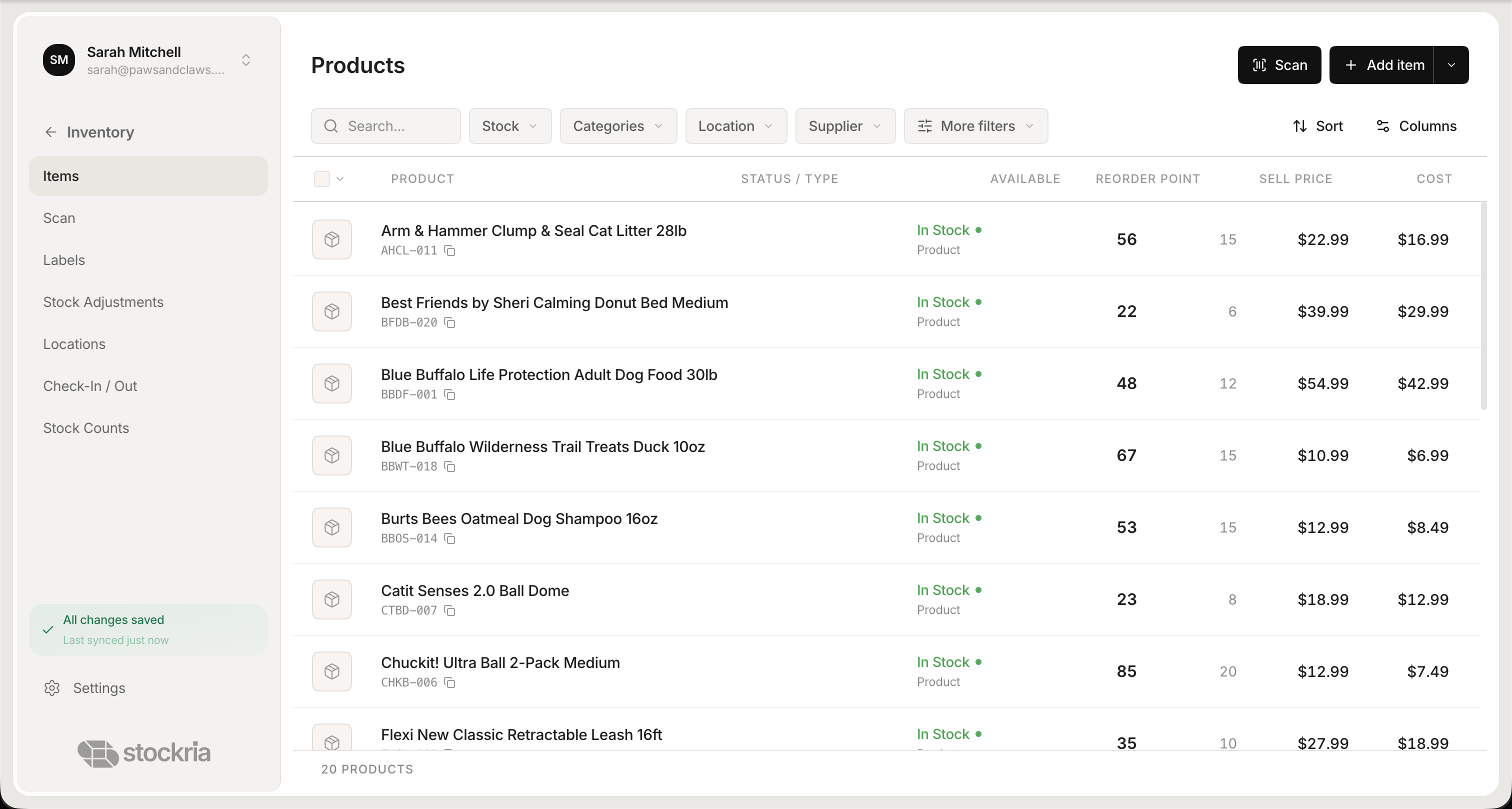 Stockria in action - Real-time stock levels across every location.
**
Stockria in action - Real-time stock levels across every location.
**
Multichannel support. The OMS should connect to every place you sell. If it does not support your marketplace or e-commerce platform, it cannot solve your core problem.
Real-time inventory sync. Inventory should update within seconds of an order, not minutes or hours. Delays cause overselling.
Shipping integration. The ability to generate shipping labels and track packages from the same system saves time and reduces errors.
Returns handling. Returns are inevitable. The system should make it easy to process returns, restock items, and issue refunds without manual inventory adjustments.
Reporting. You need to see order volume by channel, fulfillment times, return rates, and top-selling products. These metrics drive better decisions.
OMS vs inventory management vs both
Some tools try to do everything. Others specialize. Here is a simple framework.
If you sell primarily through one channel and your main challenge is tracking stock levels, inventory management software is what you need. If you sell across many channels and your main challenge is processing orders efficiently, an OMS is the priority. If both apply, look for a tool that handles both or two tools that integrate well.
Start with the pain
Do not start with software categories. Start with what is actually going wrong. If you are losing sales to stockouts, fix inventory first. If you are shipping wrong items, fix order management first. Solve the most expensive problem first, then expand.