

The appeal of open source
Open source inventory software is free to download and use. You can see the code, modify it, and host it yourself. For a small business watching every dollar, "free" is a powerful word.
Popular options include InvenTree, Part-DB, and Odoo Community Edition. Each has an active community, decent documentation, and enough features to manage basic inventory operations.
Where open source works well

Technical founders. If you or someone on your team is comfortable with servers, databases, and command-line tools, open source can be a great fit. You can customize the software to match your exact workflow instead of adapting your workflow to the software.
Specific industry needs. Open source tools can be modified for unusual requirements that commercial software does not support. A niche manufacturer with unique tracking needs can add custom fields, reports, and integrations.
Budget constraints. When you are starting out and every subscription matters, open source lets you manage inventory without a monthly bill. The trade-off is your time, but if you have more time than money, that trade-off works.
Data control. Self-hosting means your inventory data stays on your servers. For businesses with strict data requirements or those operating in areas with limited internet, this matters.
Where open source falls short
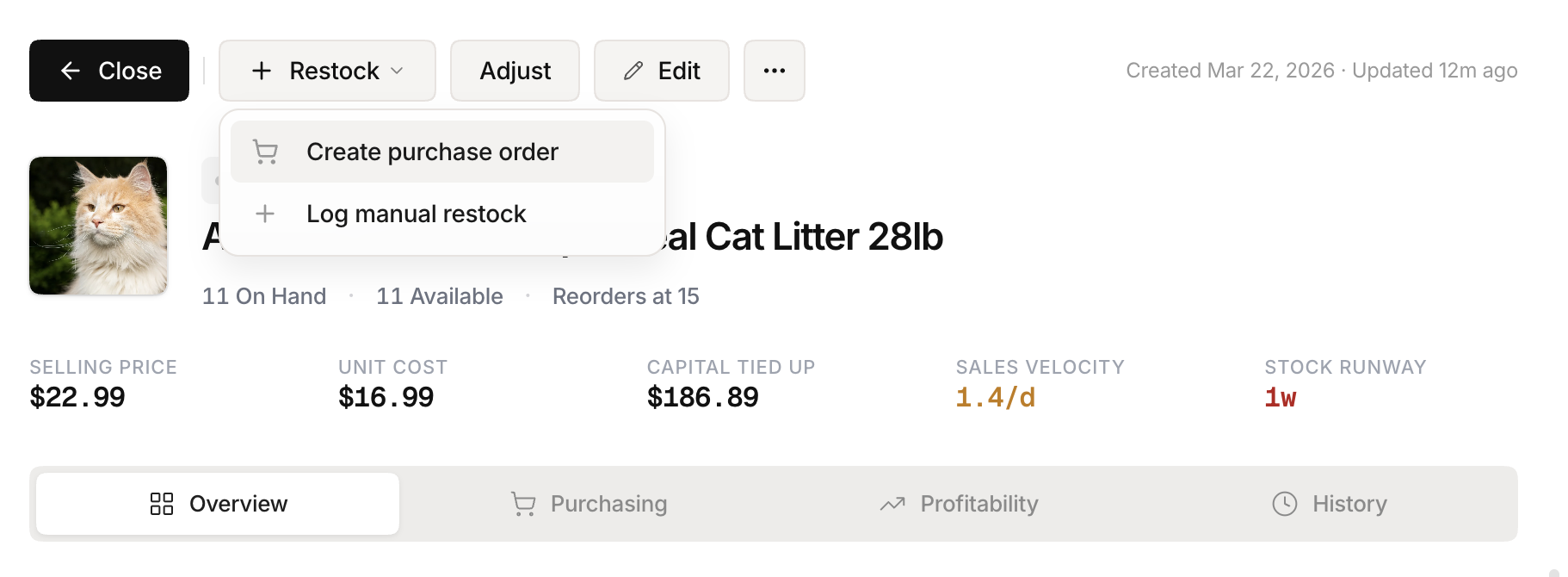 Stockria in action - Reorder point tracking keeps your supply chain on schedule.
Setup time. Installing, configuring, and deploying open source software can take days or weeks. A cloud-based tool takes minutes. That setup time has a real cost even if you do not write yourself a check for it.
Ongoing maintenance. You are responsible for updates, backups, security patches, and server uptime. When the system goes down on a busy Saturday, you are the IT department.
No support team. Community forums are helpful but they are not the same as a support team that responds in hours. When inventory tracking breaks before a big shipment, you need answers fast.
Mobile experience. Most open source inventory tools are built for desktop browsers. The mobile experience is often an afterthought - clunky interfaces, no barcode scanning, and layouts that do not work on a phone screen.
Integrations. Connecting to your accounting software, e-commerce platform, or shipping tools usually requires custom development. Commercial tools handle these integrations out of the box.
Questions to ask before choosing open source
Can you or someone on your team handle server administration? Do you have time to configure and maintain the software? Are you comfortable without guaranteed support response times? Do you need mobile access or barcode scanning? How many integrations do you need with other tools?
If you answered "no" to two or more of these, open source will likely create more problems than it solves.
The honest answer
Open source inventory software is a viable option for technically capable teams with simple needs and tight budgets. For everyone else, the hidden costs of time, maintenance, and limitations usually exceed the subscription cost of a purpose-built tool.