

What ERP actually does
ERP stands for enterprise resource planning. It is a single system that connects your manufacturing, inventory, accounting, sales, purchasing, and HR. When an order comes in, the ERP updates inventory, schedules production, creates purchase orders for raw materials, and posts to your general ledger - all automatically.
For large manufacturers with hundreds of employees and complex supply chains, ERP is essential. For a small business with 5 to 50 employees, the answer is more nuanced.
When ERP is overkill

If your manufacturing operation has fewer than 20 employees, fewer than 200 SKUs, a straightforward production process, and you are not managing multiple warehouses or production facilities, a full ERP system will probably create more problems than it solves.
ERPs like SAP, Oracle, and Microsoft Dynamics are built for complexity. They take months to implement, cost tens of thousands of dollars, and require dedicated staff to maintain. Small manufacturers spend more time feeding the system than getting value from it.
The most common complaint from small manufacturers who buy ERP: they use 10% of the features and spend half their time on data entry the system demands.
When ERP makes sense
ERP starts making sense when your production involves multiple stages with different teams, you manage dozens of suppliers and need automated purchasing, your bills of materials are complex with many levels, you need real-time visibility across multiple locations, or regulatory compliance requires full traceability.
If three or more of these apply to you, it is worth evaluating ERP. If fewer than three apply, simpler tools will serve you better.
Better alternatives for small manufacturers
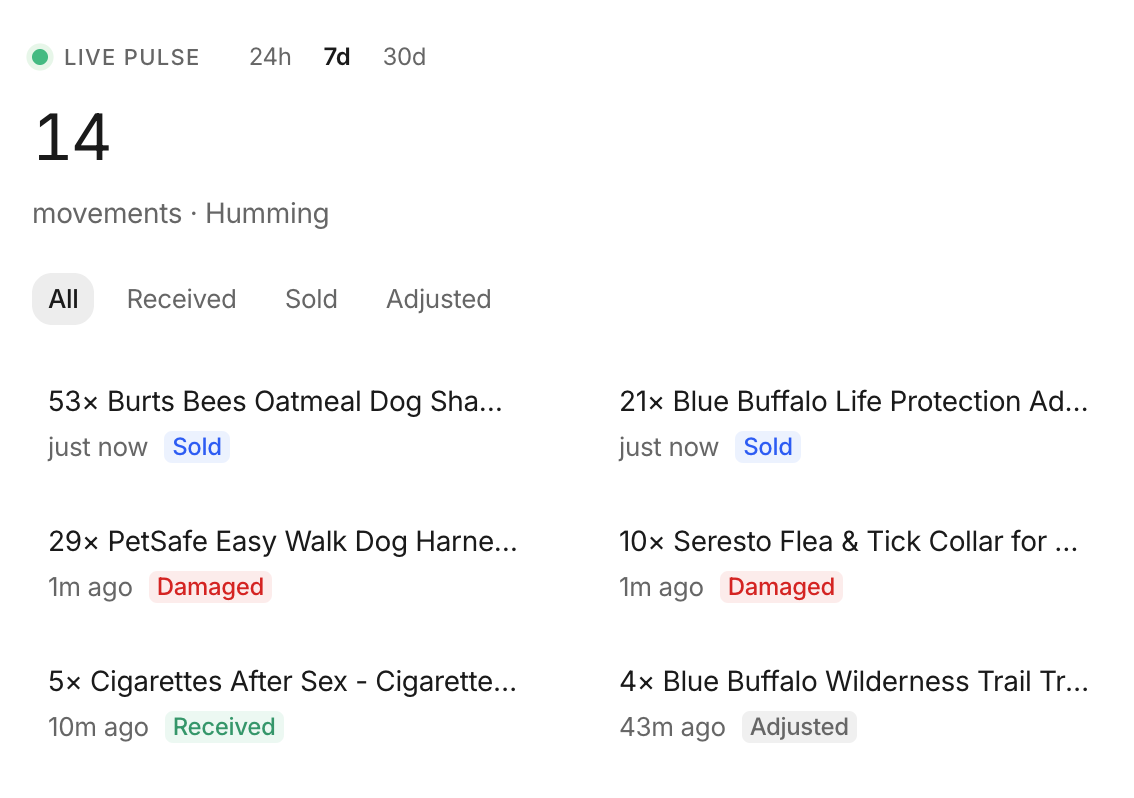 Stockria in action - Low-stock alerts tell you what's running out and when to reorder.
Inventory management plus accounting integration. Tools like Stockria for inventory connected to QuickBooks or Xero for accounting cover most small manufacturers' needs. You get inventory tracking, purchase orders, and financial visibility without the ERP overhead.
Lightweight MRP tools. If you need production planning specifically, look at MRP tools designed for small manufacturers. They handle bills of materials, production scheduling, and material requirements without the full ERP weight.
Spreadsheets plus discipline. If your operation is small enough, well-structured spreadsheets for production scheduling combined with inventory software can work. This approach fails when you grow, but it costs nothing while your needs are simple.
How to evaluate what you need
Start with your pain points, not with software categories. Write down the three biggest problems in your operation right now. Then find the simplest tool that solves those specific problems.
If your biggest problem is tracking raw materials, you need inventory software. If it is scheduling production, you need an MRP tool. If it is connecting everything together because nothing talks to anything else, that is when ERP conversations become relevant.
The path forward
Start small and add complexity as needed. Most small manufacturers grow into ERP over years, not overnight. Begin with dedicated inventory management, add production planning when the pain justifies it, and consider ERP when you are genuinely managing enterprise-level complexity.