
The operations lead usually holds the system together
Ops managers are the people who make sure the shelves are stocked, the pick lists are accurate, the cycle counts actually happen, and the end-of-month numbers tie out. When the system is a spreadsheet plus three people's memories, they're the ones chasing down discrepancies at 9pm. When the system is a proper inventory tool, they're the ones configuring it.
Stockria gives ops managers the controls to run a tight inventory operation without burning a weekend on it.
What Stockria lets an ops manager do
Run cycle counts without closing the business
Schedule counts by location, category, or assignee. Run them daily, weekly, or monthly without stopping sales. Compare counted vs expected on one screen. Reconcile or approve variances in bulk.
Set reorder points that reflect reality
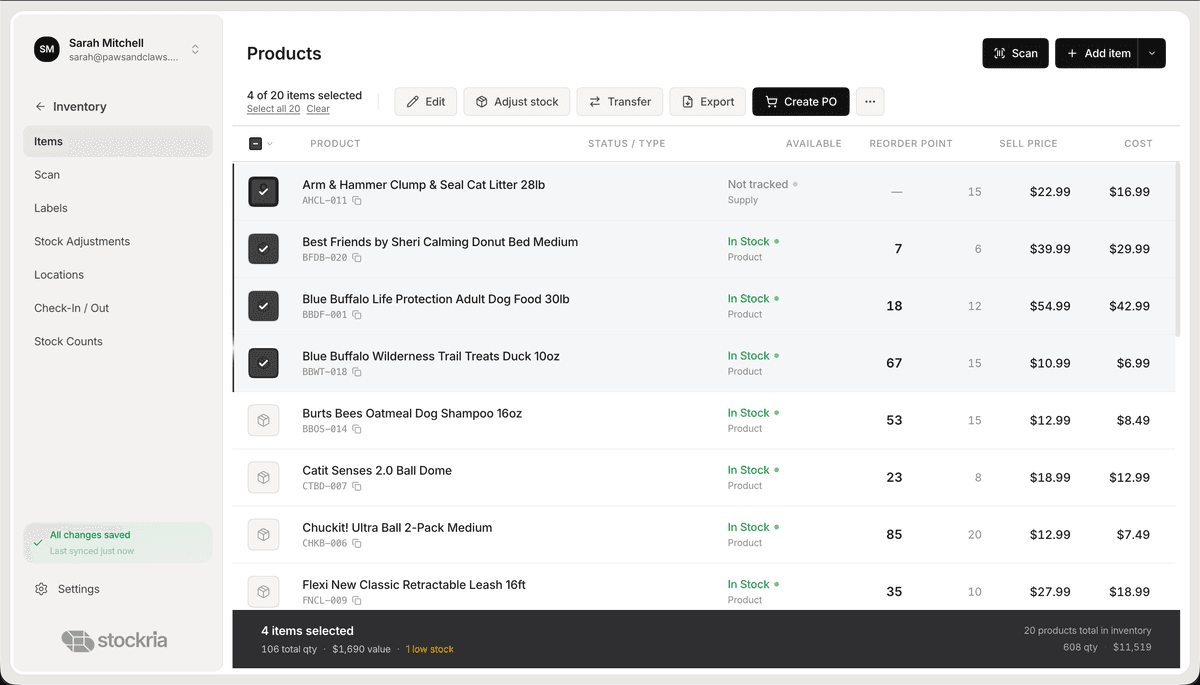
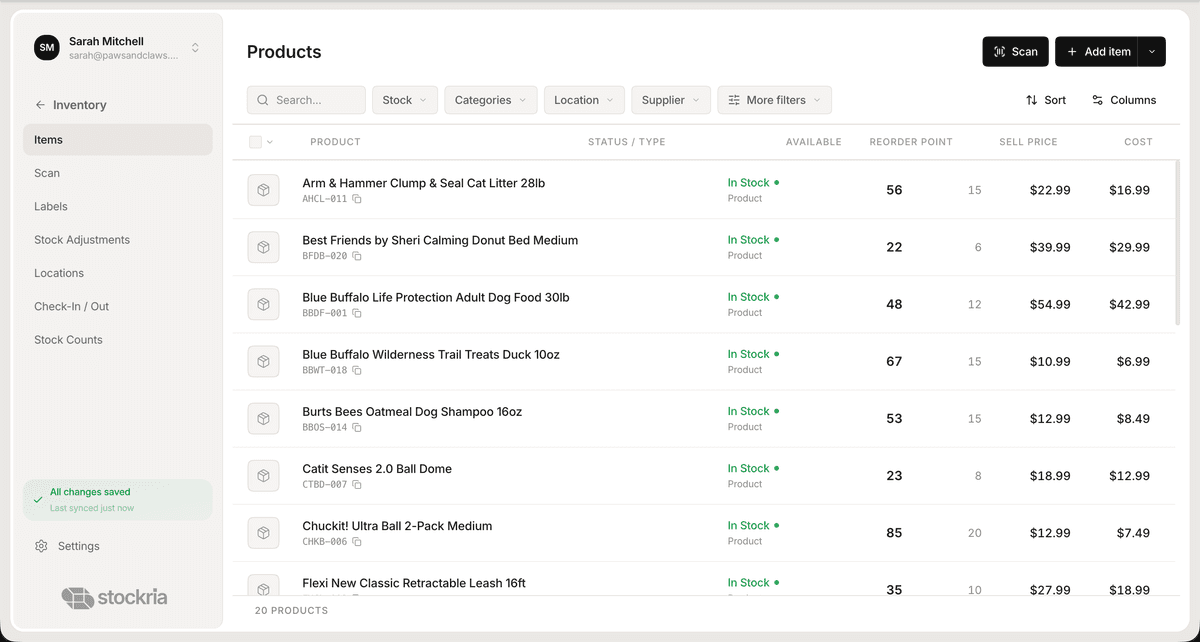
Set thresholds per item, per location. Pull historical sales data to calibrate them. Automate draft POs so buyers aren't starting from a blank template every week.
Govern who can do what
Custom roles let you scope permissions at whatever granularity your team needs. The part-timer who runs receiving can scan items in but can't delete products. The finance lead can see reports but can't change stock. Every action is audited.
Export the numbers your team asks for
Weekly stock movement, monthly valuation, aging inventory, supplier performance. Every report exports to CSV and lives alongside the live data that powers it.
Who this is for
Ops managers at small-to-mid businesses doing five to fifty thousand orders a month. Teams with multiple locations and a handful of people touching inventory. Operations roles that currently stitch together three tools and would rather run one.