

Why purchase orders matter
A purchase order is your written record of what you are buying, from whom, at what price, and when you expect delivery. Without one, you are relying on verbal agreements and email threads that get buried.
POs protect you in disputes. If a supplier delivers 80 units instead of 100, your PO is the proof of what was agreed. If they charge $12 per unit instead of the quoted $10, the PO settles the disagreement immediately.
They also bring discipline to your purchasing. When every buy requires a PO, impulse orders and unauthorized spending drop dramatically.
What every purchase order should include

Header information. Your company name and address, the supplier's name and address, PO number (sequential is fine - PO-001, PO-002, etc.), PO date, and expected delivery date.
Line items. Each item you are ordering needs a description, SKU or part number, quantity, unit price, and line total. Be specific. "Blue widget, 4-inch, Model BW-4" is better than "widgets."
Totals. Subtotal, any applicable taxes, shipping costs, and grand total. No one should have to do math to understand the total commitment.
Terms and conditions. Payment terms (Net 30, due on receipt, etc.), shipping method, and any special instructions. Keep this section short but clear.
Approval. Who authorized this purchase. For small businesses, this is usually the owner. As you grow, define spending limits where different people can approve purchases up to certain amounts.
A simple PO structure
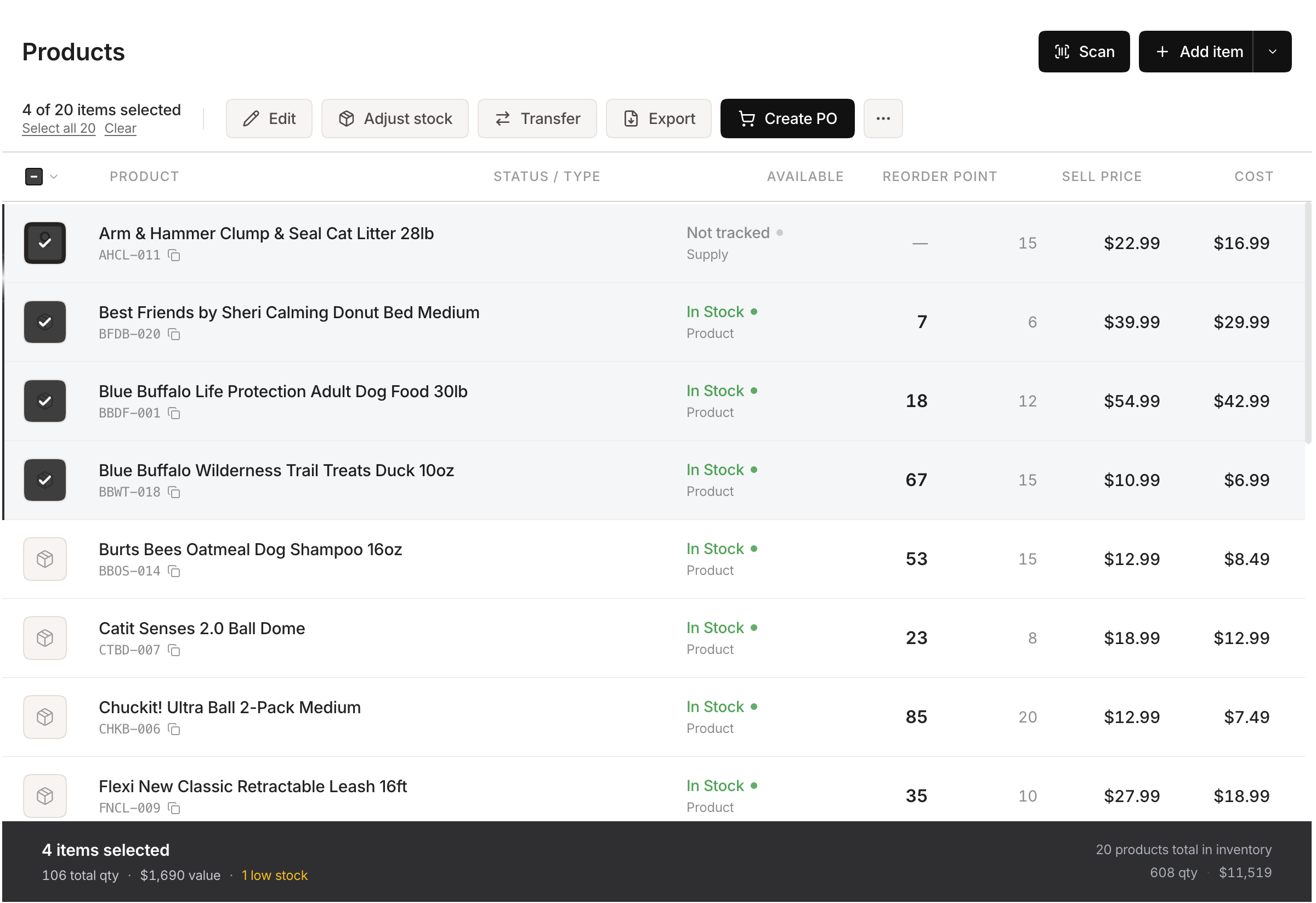 Stockria in action - Edit product details, adjust stock, and track cost from one screen.
The layout should flow from top to bottom: your company info at the top, supplier info below it, then a table of line items, then totals, then terms. One page is ideal. If your PO needs more than two pages, you might be including too much detail or ordering too many line items at once.
Number your POs sequentially and never reuse a number. This sounds obvious but businesses that create POs in spreadsheets sometimes accidentally duplicate numbers, which creates confusion when referencing past orders.
Common PO mistakes
Vague descriptions. "Screws" is not a line item. "Phillips head, #8 x 1.5 inch, stainless steel, box of 100" is a line item. Vague descriptions lead to wrong deliveries.
Missing delivery dates. Without a delivery date, you have no basis to follow up on late orders. Always include when you expect the goods.
No PO number on communications. When you email or call a supplier about an order, reference the PO number. This prevents confusion when you have multiple active orders with the same supplier.
Skipping POs for small orders. Even a $50 order deserves a PO. Small orders add up, and skipping documentation creates gaps in your purchasing records.
Moving beyond templates
Templates work when you are placing a few orders per week. Once you are sending dozens of POs per month, software that generates, tracks, and matches POs to deliveries saves significant time. The structure stays the same - the automation handles the repetition.