

How consignment inventory works
In a consignment arrangement, a supplier places their products in your store or warehouse, but you do not pay for them until they sell. The supplier retains ownership of the goods. You act as the selling agent.
When an item sells, you pay the supplier their agreed wholesale price (or a percentage of the sale price) and keep the difference. Unsold items can be returned to the supplier at no cost to you.
This is the opposite of traditional wholesale where you buy inventory upfront, own it, and bear the risk if it does not sell.
Benefits for retailers

Zero upfront cost. You stock your shelves without spending cash. This is especially valuable for new businesses or those testing new product categories. You can offer a wider selection without the financial risk.
No dead stock risk. If a product does not sell, you return it. You do not get stuck with clearance bins of items you bought at full wholesale price.
Better cash flow. Your money stays in your bank account until you actually make a sale. This frees up capital for marketing, rent, and other expenses that cannot wait.
Easy product testing. Want to see if handmade candles sell in your gift shop? Take them on consignment for 90 days. If they move, keep stocking them. If not, send them back.
Benefits and risks for suppliers
Suppliers accept consignment because it gets their products into more stores. A retailer who would never risk buying 200 units might happily display them on consignment. The supplier gets shelf space and exposure.
The risk for suppliers is real, though. They tie up inventory in locations they do not control, without guaranteed sales. They also need to trust that the retailer reports sales honestly and handles their products with care.
The consignment agreement
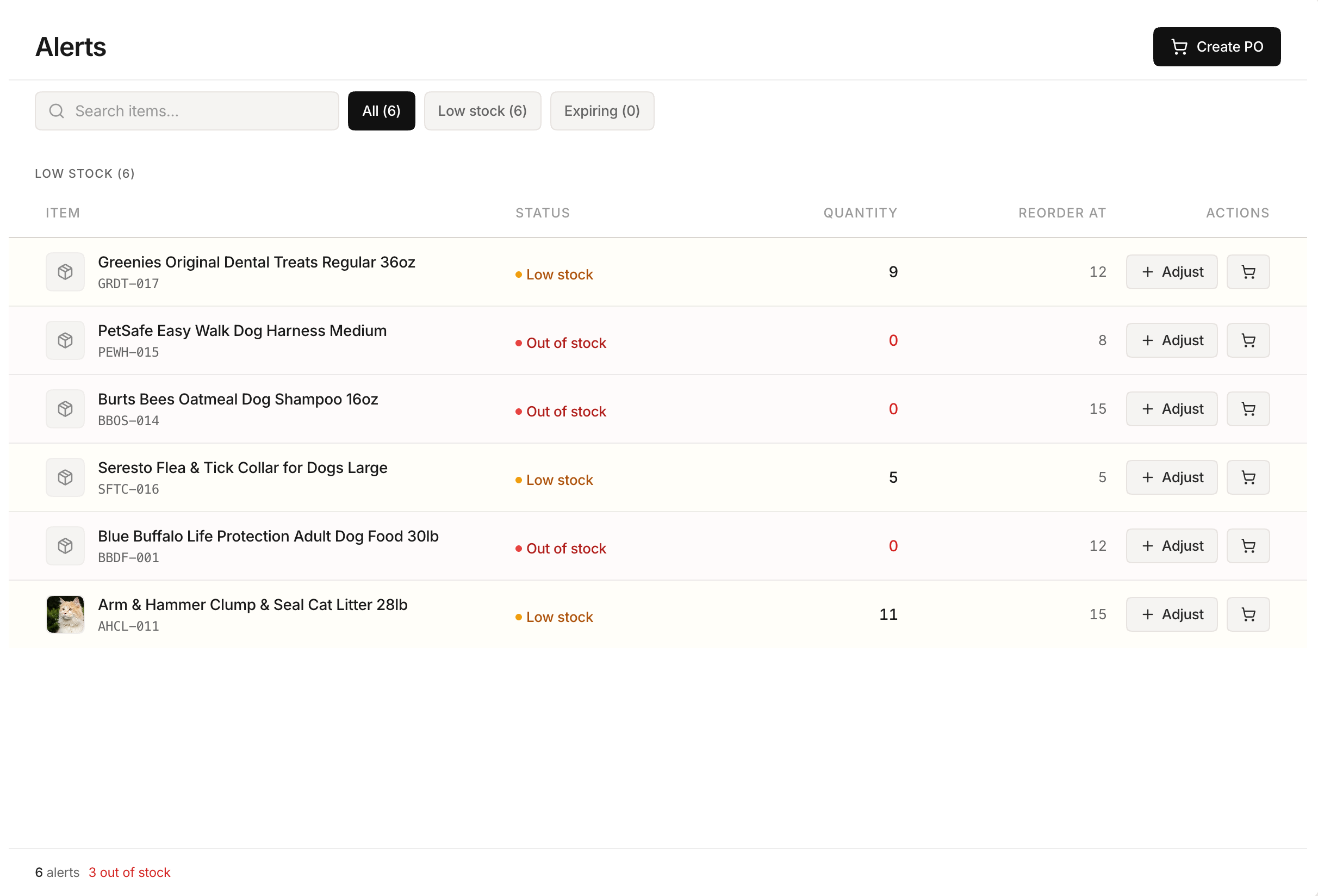 Stockria in action - Full alerts dashboard with days-until-stockout projections.
Every consignment relationship needs a written agreement covering these points:
- Commission split. What percentage does the retailer keep? Typical splits range from 40/60 to 60/40 in the retailer's favor.
- Payment schedule. How often does the retailer pay the supplier? Monthly is standard.
- Reporting. How does the retailer report what has sold? A monthly sales statement with item-level detail is common.
- Liability. Who pays if items are damaged or stolen while in the store? Usually the retailer takes responsibility once goods are received.
- Return policy. Can the retailer return unsold items at any time, or only at the end of a defined period?
- Minimum display requirements. Some suppliers require a certain amount of shelf space or prominent placement.
Tracking consignment stock in your system
Consignment inventory needs to be tracked separately from your owned inventory. You need to know what is on your shelves, but it should not appear as a cost on your balance sheet because you do not own it.
In your inventory system, create a separate category or tag for consigned items. Track quantities on hand, quantities sold, and the supplier's wholesale price. At the end of each month, generate a report showing what sold and calculate the payment owed.
The most common mistake is mixing consignment items into your regular inventory reports. This inflates your inventory value and distorts your cost of goods sold calculations.
Is consignment right for your business?
Consignment works best when you are testing new products, working with local artisans or makers, or stocking high-value items where the upfront cost would strain your budget. It works less well for commodity products with thin margins, since the commission split eats into already slim profits. Start with one or two suppliers, get the tracking right, and expand from there.