

Why better inventory management matters
Poor inventory management quietly drains small businesses. Overstocking ties up cash you could spend elsewhere. Stockouts lose sales and frustrate customers. And without clear processes, you waste hours every week tracking down products or fixing order mistakes.
The good news: you do not need expensive systems or complex strategies to see real improvements. Small, deliberate changes add up fast.
Quick wins you can implement this week

1. Count your best sellers weekly. You do not need to count everything. Start with your top 20 items by revenue and count them every week. This alone catches most problems early.
2. Set reorder points for every product. Decide the minimum quantity that triggers a new order. Write it down. When stock hits that number, order immediately. No more guessing.
3. Organize your storage area. Put fast-moving items near the packing station. Group similar products together. Label every shelf and bin. A 30-minute reorganization can save hours of searching.
4. Track every adjustment. When something breaks, gets returned, or goes missing, record it immediately. These small losses add up to big discrepancies over time.
5. Review your dead stock monthly. Pull a list of items that have not sold in 90 days. Discount them, bundle them, or stop reordering them. Dead stock is dead cash.
Process improvements that compound over time
6. Standardize your receiving process. Every shipment should be counted and checked against the purchase order before it goes on the shelf. Create a simple checklist and stick to it.
7. Use the first-in, first-out method. Rotate stock so older inventory sells first. This prevents expiration and damage, especially for perishable goods or products with shelf lives.
8. Consolidate your suppliers where possible. Fewer suppliers mean fewer orders to manage, better bulk pricing, and simpler receiving. Review your vendor list quarterly.
9. Set par levels by season. Your reorder points should shift with demand. If summer doubles your sales, adjust your minimums in May, not July when you are already stocked out.
10. Move from spreadsheets to software. Spreadsheets work when you have 50 items. Beyond that, manual updates create errors faster than you can catch them. Modern inventory tools automate the tedious parts.
How to prioritize these changes
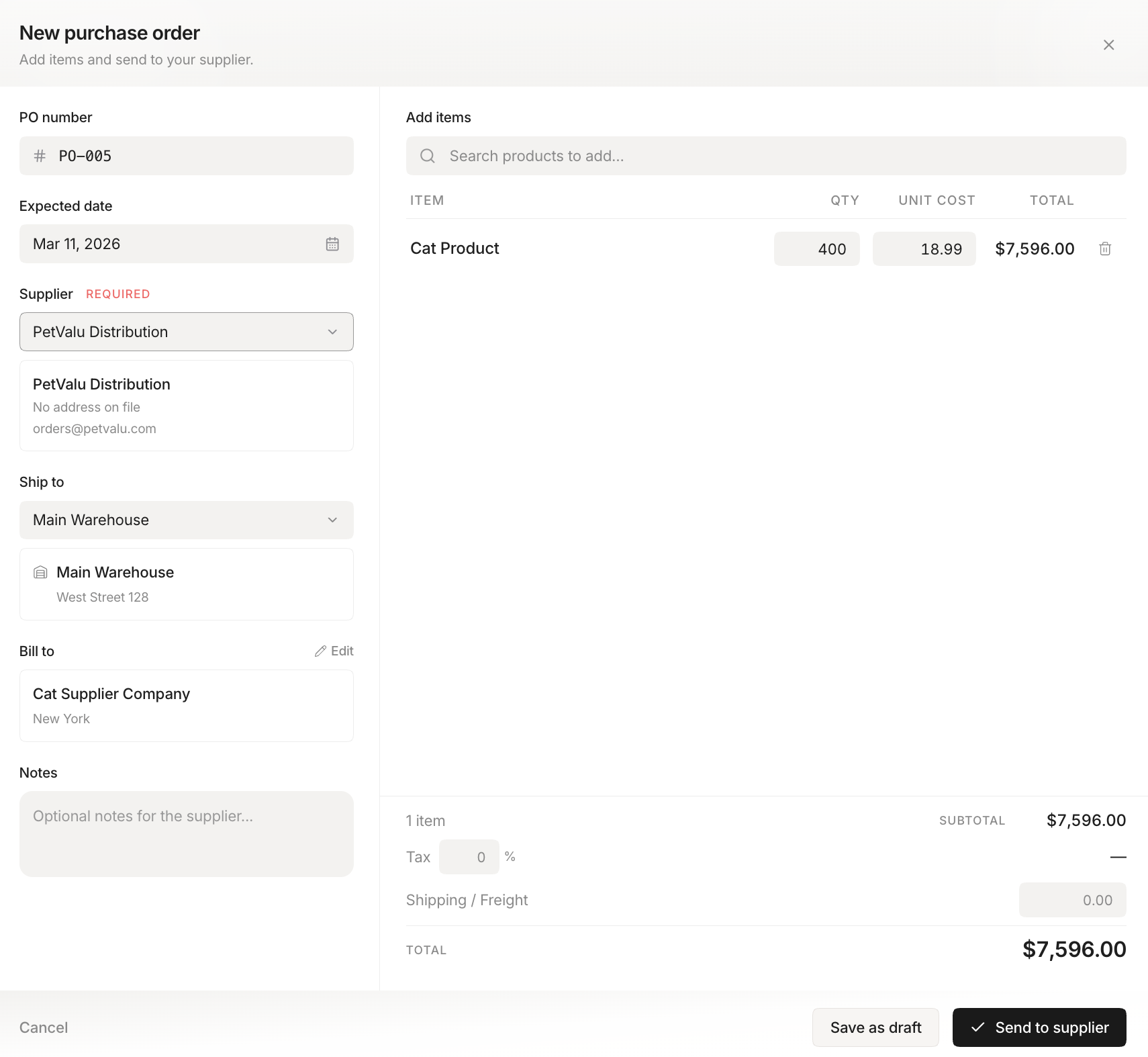 Stockria in action - Generate purchase orders from your low-stock list.
Do not try to implement all ten at once. Start with the three that address your biggest pain point:
- Frequently running out of stock? Start with reorder points, par levels, and weekly counts.
- Too much cash tied up in inventory? Focus on dead stock reviews, supplier consolidation, and FIFO rotation.
- Spending too much time on inventory tasks? Prioritize organization, standardized receiving, and software.
Pick your three, spend two weeks building the habit, then add the next improvement.
Measuring your progress
Track these numbers monthly to see if your changes are working:
- Stockout rate: How often are you out of stock on an item a customer wants?
- Inventory turnover: How many times per year do you sell through your average inventory?
- Carrying cost: What does it cost to store your inventory each month (rent, insurance, shrinkage)?
- Order accuracy: What percentage of orders ship with the right items and quantities?
Even rough estimates of these metrics will show you whether your improvements are moving the needle.
Start with one change today
The best inventory system is the one you actually use. Pick one tip from this list, implement it before the end of the day, and build from there. Small businesses that manage inventory well consistently outperform those that treat it as an afterthought.